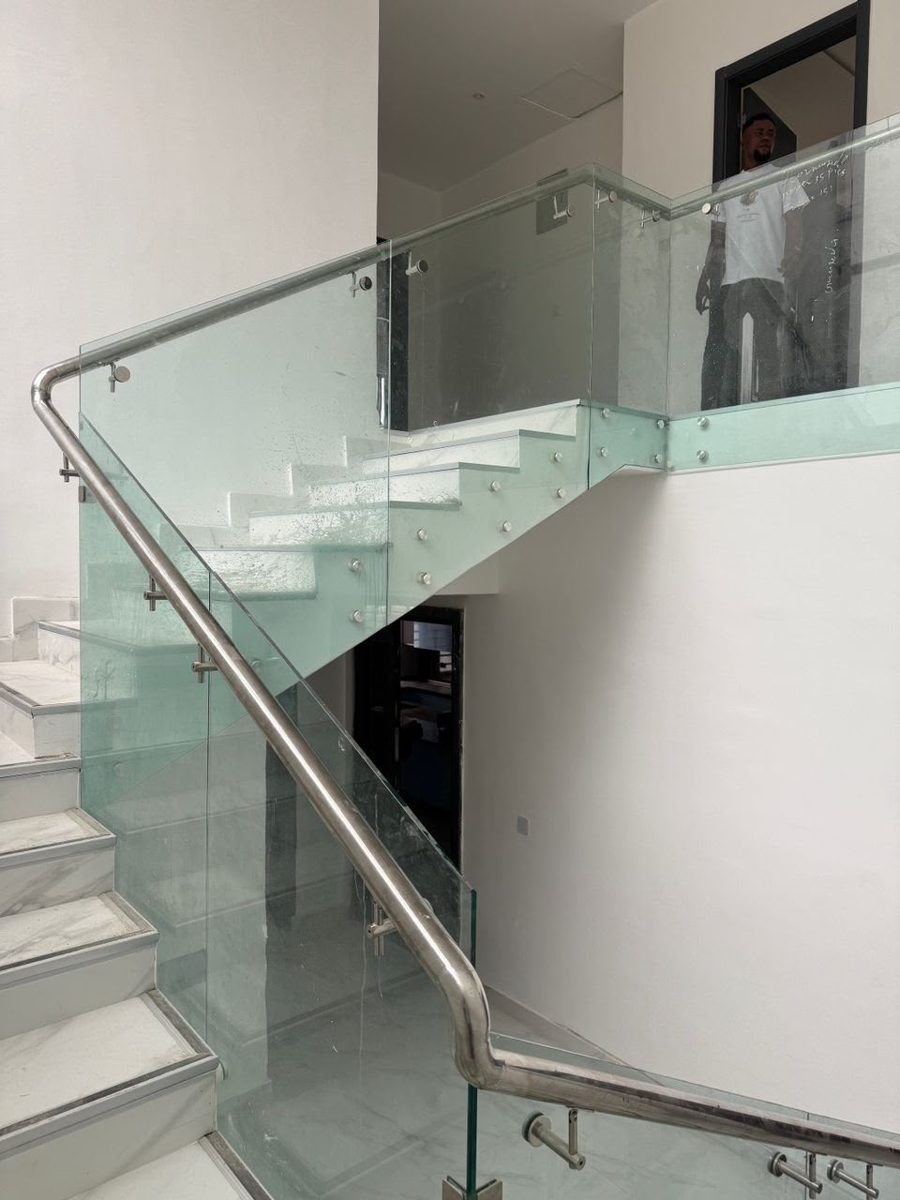
Not all "stainless steel" is the same. The grade of steel used in your handrail decides whether it keeps its shine for 20 years or shows brown spots within months. Here is what you need to know before you pay for a railing.
Quick comparison
| Grade | Rust resistance | Relative cost | Best for |
|---|---|---|---|
| 201 | Low | Cheapest | Dry indoor areas on a tight budget |
| 304 | Good | Standard | Most indoor staircases and inland balconies |
| 316 | Excellent | Highest | Coastal homes, pool areas, exposed balconies |
Grade 201
Grade 201 uses less nickel than 304, which makes it cheaper — and less resistant to corrosion. It can look identical to 304 on installation day, which is why some low quotes use it without saying so. Outdoors, and especially in humid Lagos air, it tends to develop rust spots and "tea staining" much sooner.
Grade 304 — the standard choice
Grade 304 (also written SUS 304) contains around 18% chromium and 8% nickel. It is the workhorse of the handrail industry and what we recommend for most indoor staircases and balconies away from the sea. With simple cleaning, it stays bright for many years.
Grade 316 — marine grade
Grade 316 adds 2–3% molybdenum, which greatly improves resistance to salt and chlorides. That matters if you live close to the coast — Victoria Island, Lekki, Ikoyi, Ajah or Port Harcourt waterfront areas — or if the railing is around a swimming pool. It typically costs about 20–30% more than 304, but in salty air it is the difference between a railing that lasts and one that stains.
Workmanship matters as much as grade
Even good steel can rust if it is fabricated badly. Common causes include:
- Iron contamination — using the same grinders and brushes on mild steel and stainless leaves tiny iron particles that rust on the surface.
- Untreated welds — welds must be cleaned and polished, or they become the first place rust appears.
- Thin tubes — very thin walls dent easily and feel flimsy.
How to check what you are getting
- Ask for the grade in writing on your quote.
- A magnet test is only a rough guide — 201 and cold-worked 304 can both be slightly magnetic.
- Buy from a fabricator who will come back if something goes wrong.
Want to know which grade suits your home? Send us your location and a photo on WhatsApp and we'll advise honestly. You can also read how to keep stainless steel handrails shining.
Need a price for your project?
Send photos or measurements — we reply with a free quote.