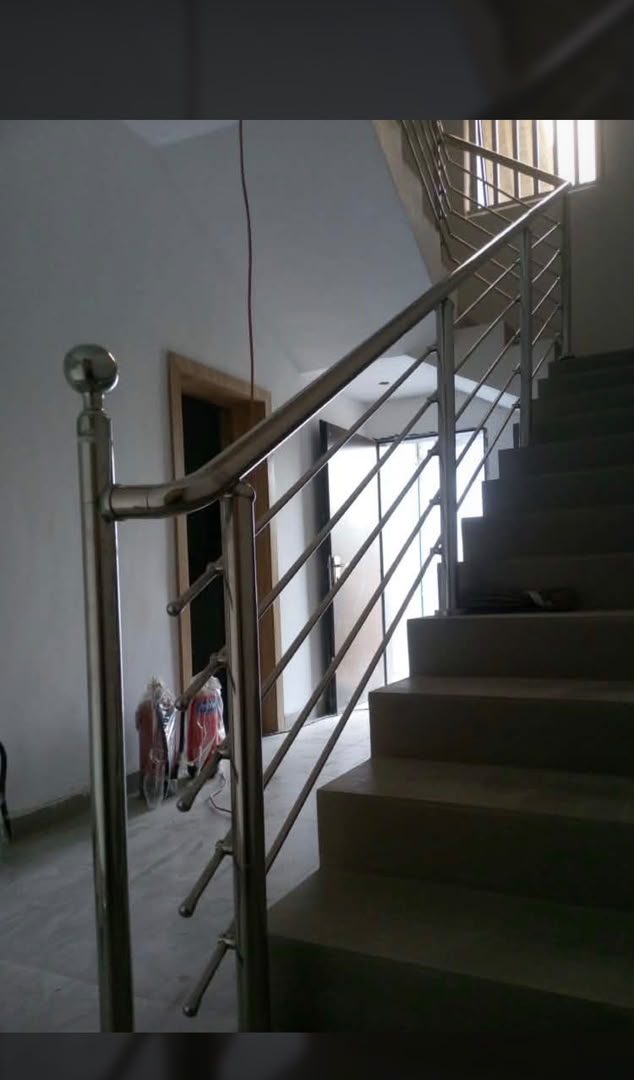
For years, painted iron railings were the default in Nigerian buildings. Today more homeowners are switching to stainless steel. Is it worth the extra money? Let's compare honestly.
Upfront cost
Iron (mild steel) railings are cheaper to buy and fabricate. Stainless steel costs more upfront because the material is more expensive and needs specialist welding and polishing.
Rust and maintenance
This is where stainless steel wins. Mild steel will rust in Nigerian humidity and rain unless it is painted — and repainted every one to three years. Rust stains run down walls and tiles. Stainless steel needs no paint; it just needs occasional cleaning. See how to clean stainless steel handrails.
Comparison
| Stainless steel | Wrought / mild iron | |
|---|---|---|
| Upfront cost | Higher | Lower |
| Rust | Resists rust (304/316) | Rusts without paint |
| Maintenance | Wipe clean | Scrape & repaint regularly |
| Look | Modern, bright, works with glass | Traditional, ornate |
| Lifespan | Decades | Depends on painting |
| Resale appeal | High | Average |
Total cost over time
When you add up repainting, labour and repairs over ten years, iron railings often cost as much as — or more than — stainless steel. Stainless steel also adds visible value when you sell or let a property.
When iron still makes sense
- Heavy security gates and burglar-proofing on a very tight budget.
- Highly ornate traditional designs.
- Temporary or site structures.
Even for security, stainless steel is increasingly popular — see stainless steel burglar-proof windows and stainless steel gates.
The verdict
If you want a railing you install once and forget, stainless steel is the better investment. Just make sure you get a proper grade — 304 or 316, not 201 — for outdoor work.
Need a price for your project?
Send photos or measurements — we reply with a free quote.