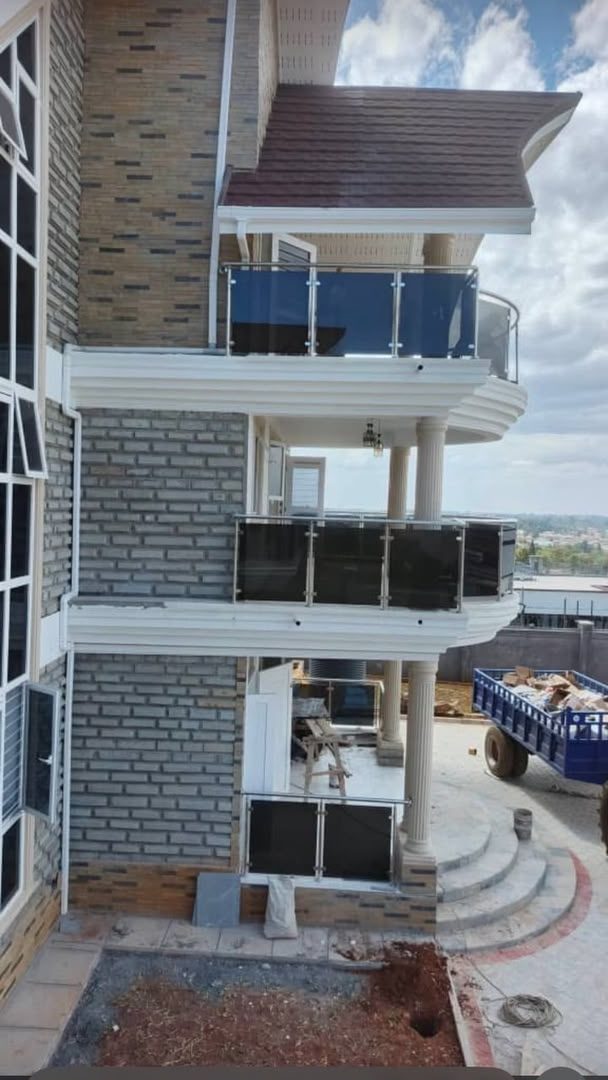
A beautiful railing that is too low, or has gaps a toddler can slip through, is a hazard. Here are the key safety measurements every staircase and balcony railing should meet.
Recommended heights
Requirements vary between countries and building authorities, but widely used international guidance looks like this:
| Location | Typical minimum height |
|---|---|
| Staircase handrail (measured from the step nosing) | about 900mm |
| Landings and internal voids | 900mm – 1000mm |
| Balconies and terraces | about 1100mm |
| Commercial buildings and high-rise balconies | 1100mm or more |
Gap and baluster spacing
A common rule is that a 100mm sphere should not pass through any gap in the railing. This stops young children squeezing their heads or bodies through. Glass panels solve this completely; rod and tube railings need rods placed close enough together.
- Horizontal rods can act like a ladder for climbing children — for family homes, vertical rods or glass are safer.
- Keep the gap at the bottom of the railing small too.
Strength
A railing must hold a person leaning or falling against it. That depends on:
- Posts fixed into solid concrete with proper anchors — not into plaster or tiles alone.
- Correct tube wall thickness.
- Tempered glass of the right thickness for the span.
Grip and comfort
- Round handrails of about 40–50mm diameter are comfortable to grip.
- The handrail should be continuous along the flight where possible.
- Ends should be closed or returned so clothes and bags don't catch.
Our safety checklist
On every installation we check height, gap spacing, anchor strength, glass type and smooth finishing before we hand over. Ask for the same from anyone you hire. See our safe and stylish staircase designs.
Need a price for your project?
Send photos or measurements — we reply with a free quote.