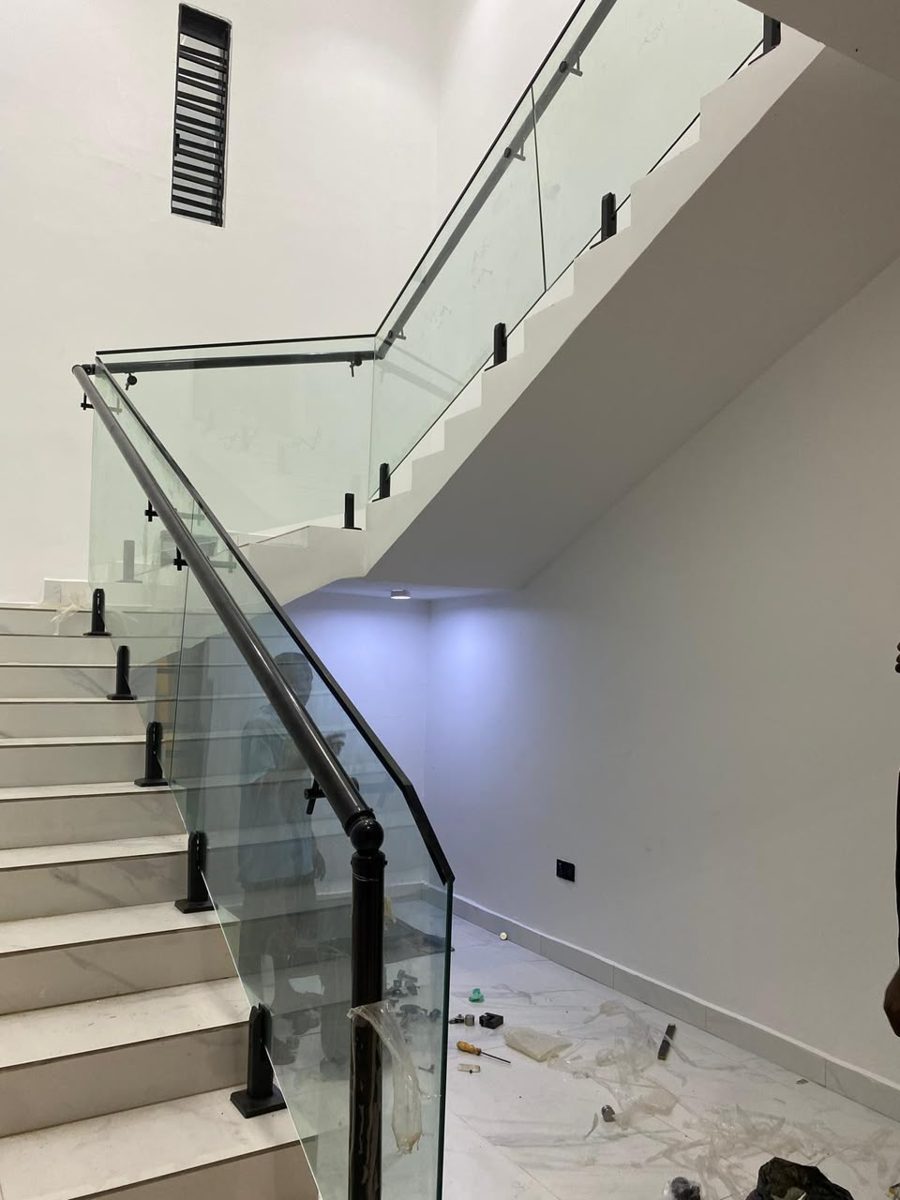
Glass railings come in two main families: frameless systems, where the glass itself does the work, and post-and-glass systems, where stainless steel posts carry the load. Both are safe when built properly — they just suit different budgets and tastes.
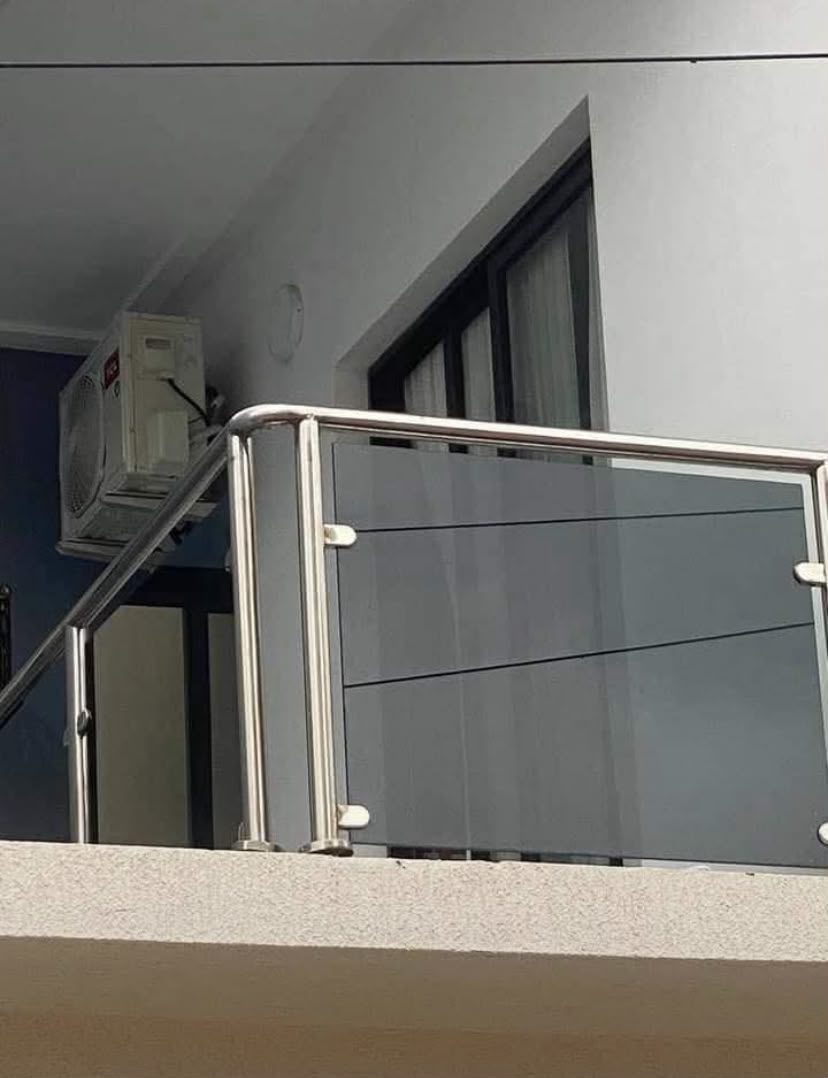
Post and glass
Stainless steel posts are fixed to the floor or stair, glass panels are held between them with clamps, and a handrail runs along the top.
- Pros: most affordable glass option, uses 10mm glass, easy to replace a panel, very sturdy.
- Cons: posts interrupt the view; more metal to clean.
Frameless with spigots
Short stainless or black spigots are bolted to the floor and grip the bottom of each glass panel. There are no full-height posts.
- Pros: clean, modern look; maximum view; works well on stairs and balconies.
- Cons: needs thicker 12mm glass; fixings must go into solid concrete.
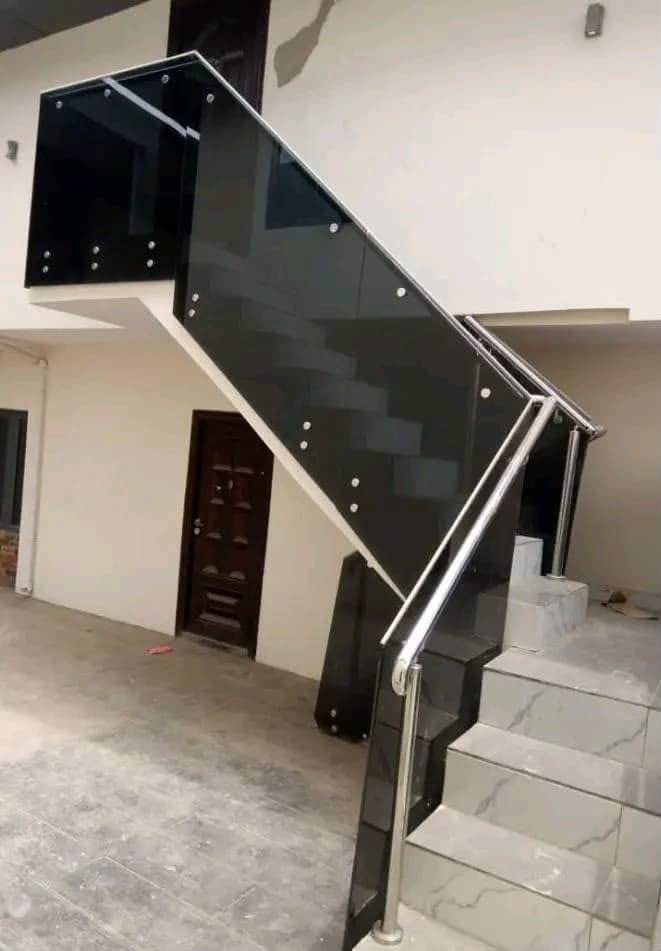
Frameless with standoffs (side-mounted)
Round standoff pins fix the glass to the side of the stair stringer or slab edge. The glass appears to float.
- Pros: keeps treads and floors completely clear; looks spectacular from below.
- Cons: holes must be precisely planned before the glass is tempered; slightly higher cost.
Side-by-side
| Post & glass | Spigot frameless | Standoff frameless | |
|---|---|---|---|
| Look | Classic | Modern, minimal | Floating, premium |
| Glass | 10mm | 12mm | 12mm |
| Relative cost | Lowest | Medium | Higher |
| Best for | Balconies, budgets | Stairs, balconies | Stairs, voids, facades |
Do frameless railings still need a handrail?
On staircases, yes — people need something to hold. Most frameless stairs still have a slim stainless or black handrail mounted on top of the glass or fixed with brackets. See handrail safety standards.
Look through both styles in our gallery, then check which glass thickness you need.
Need a price for your project?
Send photos or measurements — we reply with a free quote.